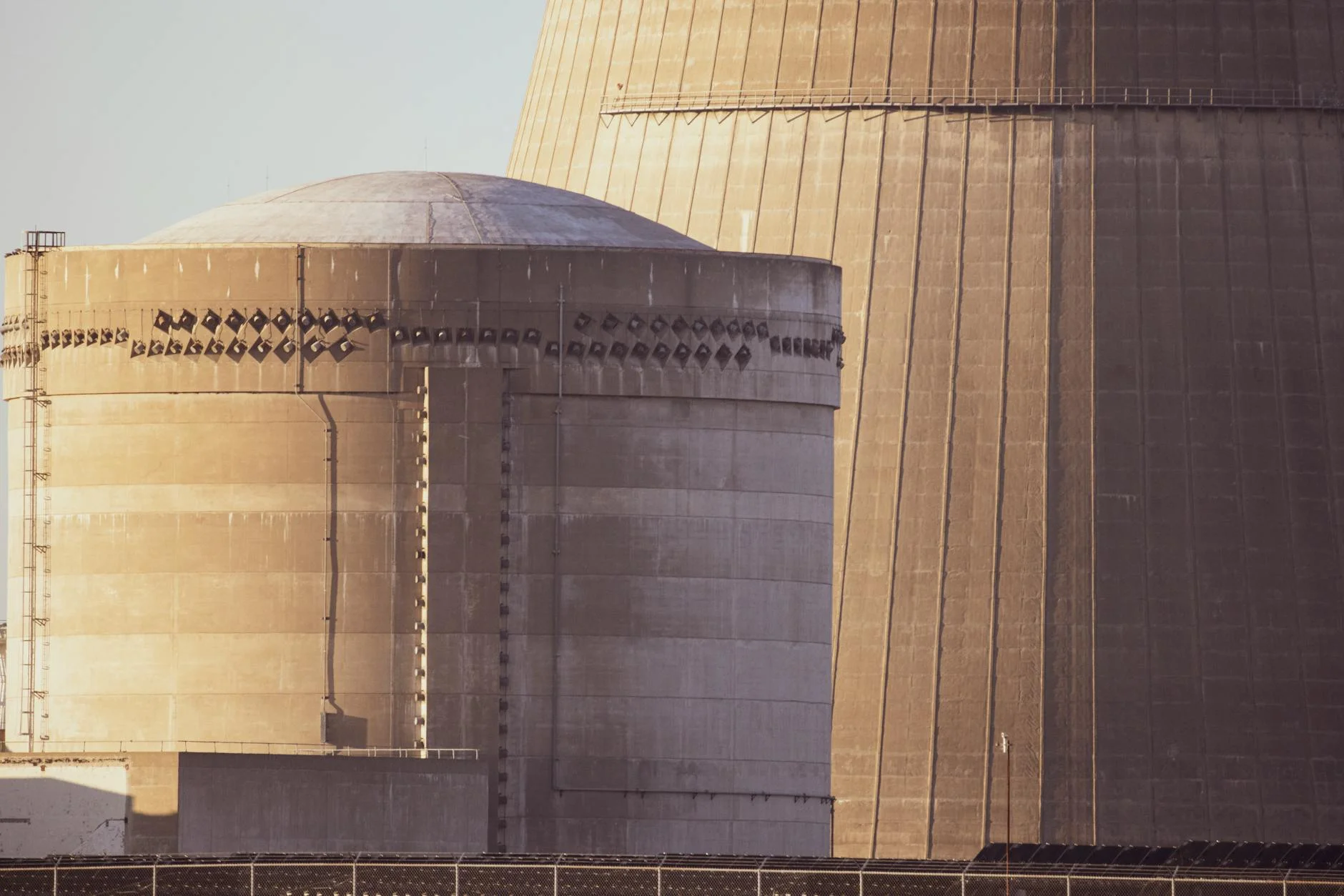
China is testing a prototype nuclear reactor small enough to fit on a truck, capable of generating 10 megawatts of power—enough to run a medium-sized AI data centre independently of the grid. Wu Yican, chief scientific adviser to the Institute of Nuclear Energy Safety Technology at the Hefei Institute of Physical Science, described the development as the world's first 10-megawatt vehicle-mounted nuclear power unit and said the team was now seeking deployment opportunities [1].
Dispatch
HEFEI, 28 APRIL 2026 — The South China Morning Post reported the development in an interview with Wu, published last week. Wu framed the reactor as a solution to what he called battery anxiety across multiple sectors:
The 'nuclear power bank' we proposed exemplifies the new generation of nuclear energy systems. This technology offers exceptional safety in a remarkably compact size and an operational lifespan of decades without recharging. It offers a solution to 'battery anxiety' in different applications, including providing power for remote regions and islands, delivering emergency backup power in special environments, propelling ships, powering space systems and supporting AI computing and data centres.
Wu Yican, Chief Scientific Adviser, Institute of Nuclear Energy Safety Technology, 28 April 2026 [1]
Wu added that next-generation nuclear systems should be built on the principle of ensuring nuclear safety at the source and should be approachable, flexible and intelligent, enabling them to meet the future's diverse energy needs. [1]
A contrasting perspective emerges from the broader geopolitical context. The UN nuclear non-proliferation treaty review conference opened in New York on the same week, with UN Secretary-General António Guterres warning that the drivers of proliferation are accelerating and that commitments remain unfulfilled [2]:
For too long, the treaty has been eroding. Commitments remain unfulfilled. Trust and credibility are wearing thin. The drivers of proliferation are accelerating. We need to breathe life into the treaty once more.
António Guterres, UN Secretary-General, 28 April 2026 (summarised) [2]
France's Foreign Minister Jean-Noël Barrot told the same conference that never has the risk of nuclear proliferation been so high and the threat posed by Iran's and North Korea's programmes is intolerable for each and every state party to this treaty. [2] No major nuclear non-proliferation expert has yet publicly commented on China's truck-mounted reactor announcement in relation to the treaty review, leaving a critical analytical gap.
What's Really Happening

The Real Stakes
For AI infrastructure: If truck-mounted reactors prove viable and safe, they fundamentally change data centre economics. A 10MW unit could power a facility anywhere—a remote industrial zone, a government compound, a military research campus—without waiting for grid extension or negotiating with local power companies. This accelerates China's ability to build AI capacity outside major urban centres, potentially outside international scrutiny. The UK's own government departments cannot agree on how much power AI data centres will consume by 2030 [3], suggesting Western planners are caught flat-footed by the speed of deployment.
For non-proliferation: Mobile nuclear reactors introduce verification and control challenges that the current non-proliferation treaty framework was not designed to handle. A truck-mounted unit is inherently harder to monitor than a fixed reactor at a known location. International Atomic Energy Agency (IAEA) inspectors cannot continuously track mobile assets. Wu's emphasis on safety at the source is reassuring rhetoric, but the treaty system depends on transparency and continuous inspection. China has not announced IAEA involvement or international safeguards protocols [1][2].
For the US-China tech race: This reactor development arrives precisely as the White House is accusing Chinese firms of industrial-scale campaigns to steal US AI technology through distillation attacks [7]. The timing is not coincidental. If China can build and deploy AI infrastructure independently—powered by its own mobile reactors, using domestically developed chips and models—it reduces leverage points where the US can apply pressure. The Meta-Manus block signals that Beijing is willing to weaponise regulatory control over AI talent and IP. Mobile nuclear power removes another dependency.
For energy security in Asia: China's truck-mounted reactor is not an isolated project. It sits alongside China's hints about a nuclear-powered aircraft carrier [8], its dominance in EV manufacturing [6], and its construction of alternative oil pipelines to bypass the Strait of Hormuz [9]. The pattern is a systematic reduction of vulnerability to external energy chokepoints. For competitors and allies, this means China will be harder to pressure through energy sanctions or supply-chain disruption.
Geopolitical Dimension
China vs. the West: The reactor announcement is a signal of strategic intent. China is signalling that it will not rely on Western grid infrastructure, Western energy companies, or Western permission to build AI capacity. The timing—during a US-China tech war, a UN non-proliferation conference, and just days after Beijing blocked Meta's AI acquisition—suggests this is deliberate messaging: we are building our own systems, our own way.
China vs. the Non-Proliferation Regime: Wu's framing of the reactor as a civilian, commercial technology for data centres is technically accurate but strategically ambiguous. The technology itself is dual-use. A 10MW reactor that can power a data centre can also power a military facility, a research campus, or a remote installation. The non-proliferation treaty assumes a world where nuclear technology is concentrated at fixed, monitored sites. Mobile reactors blur that assumption. If China deploys dozens of these units and other states follow, the verification regime becomes exponentially harder to maintain.
Regional implications: Japan, South Korea, and other US allies in Asia will watch this development closely. If truck-mounted reactors prove operationally sound, they will face pressure to develop equivalent systems or purchase them from China. This could shift the energy-independence calculus across the region and reduce US leverage over allied energy policy.
Impact Radar
Watch For
1. IAEA statement on mobile reactor oversight. If the IAEA publishes guidance on inspection and safeguards for vehicle-mounted reactors by Q3 2026, it signals the international community is taking the technology seriously and beginning to establish verification protocols. Silence from the IAEA would suggest complacency or lack of leverage over China.
2. First deployment announcement. Watch for Wu's team or another Chinese institute to announce a real-world deployment—a data centre, a remote facility, or a military installation receiving a truck-mounted reactor. This will confirm whether the prototype is production-ready and signal where China prioritises deployment.
3. US or allied counter-announcement. If the US, UK, or Japan announces a competing mobile reactor programme or accelerated small modular reactor (SMR) deployment by Q4 2026, it indicates the West is treating this as a strategic competition, not just a technical curiosity.
4. Meta-Manus unwinding details. If China's forced unwinding of Meta's acquisition includes restrictions on Manus co-founders or data reversal demands, it will confirm Beijing's willingness to use regulatory control as a tool to prevent offshore transfer of AI talent and IP—the exact talent pool that could build competing systems.
Bottom Line
China has prototyped a technology that solves a real problem—the cost and vulnerability of grid-dependent AI infrastructure—while simultaneously reducing its dependence on international energy systems and creating ambiguity around nuclear proliferation oversight. The truck-mounted reactor is not a weapon, but it is a tool that shifts the balance of power in energy autonomy and AI infrastructure competition. The West has no equivalent system in deployment, and the non-proliferation regime has no clear framework to monitor mobile reactors. This is a strategic move disguised as an engineering announcement. Watch whether the international community responds with verification protocols or with silence.