The Supreme Court heard oral arguments Wednesday on whether the Trump administration can revoke Temporary Protected Status (TPS) for hundreds of thousands of Syrians and Haitians who have lived and worked legally in the United States for over a decade. The case hinges on a narrow but consequential question: whether the Department of Homeland Security's decision to terminate TPS designations is reviewable by courts, or whether the 1990 statute grants the executive absolute discretion. The answer will likely determine the fate of nearly 1.3 million TPS holders across 17 designated countries [1].
Dispatch
WASHINGTON, 29 April 2026 — The Guardian reported that the Supreme Court consolidated two separate cases—one filed by Haitian TPS holders in Washington DC federal court, the other by Syrians in New York—into a single docket [1]. The Trump administration's position is unambiguous: it argues that the TPS statute "covers the waterfront," barring any judicial review of DHS termination decisions [2].
The supreme court will hear oral arguments on Wednesday over whether the Trump administration can strip the temporary protected status (TPS) of hundreds of thousands of Syrians and Haitians, under a program that has protected them from deportation due to safety concerns in their home countries. If the supreme court sides with the Trump administration in its effort to cut the program for Syrians and Haitians, analysts say the administration would likely seek to end the TPS program for all countries. Nearly 1.3 million people were TPS holders at the start of the second Trump administration.
The Guardian, 29 April 2026
NPR's reporting on the same case provides the administration's factual justification for the terminations [2]:
Last year, Kristi Noem, the former DHS secretary, said the new Syrian government was moving towards stable institutional governance, following the late-2024 fall of longtime Syrian president Bashar al-Assad. Noem also said there are no extraordinary and temporary conditions in Haiti that could prevent Haitians from returning in safety, despite significant gang violence continuing in country.
NPR, 29 April 2026
However, this claim sits in direct tension with the ground reality. NPR's Nina Totenberg noted that Haiti suffers from cholera epidemics, roving gangs and no functioning government and that Syria continues to experience civil war and Israeli bombing attacks [2]. The lawyers for TPS recipients counter that the Trump administration has failed to comply with the procedural requirements mandated by federal law—specifically, that the administration must demonstrate that conditions in the home countries no longer constitute extraordinary or temporary obstacles to safe return [2].
Ahilan Arulanantham, representing the Syrians in the case, outlined the vetting regime that TPS holders already undergo:
They have to go through a vetting process which involves biometrics, background check, running them against all the government's databases. Two misdemeanors, you're out.
Ahilan Arulanantham, attorney for Syrian TPS holders, NPR, 29 April 2026
What's Really Happening
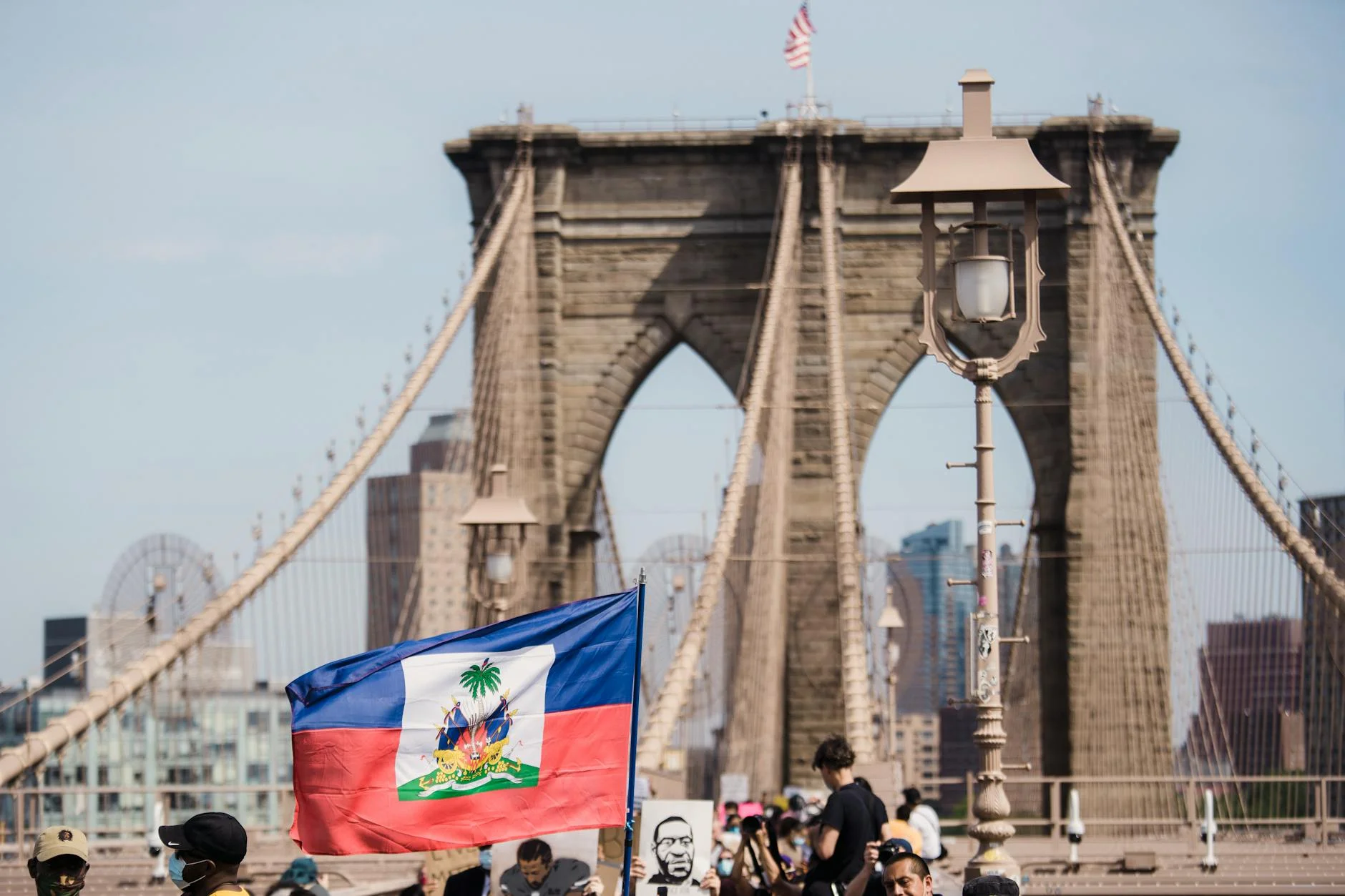
The Real Stakes
For the 600,000+ affected immigrants: A ruling for the Trump administration would trigger a 18-month wind-down period (the standard TPS renewal cycle), after which Haitians and Syrians would lose work authorization and become deportable [1]. For those who have built lives in the US—established businesses, purchased homes, enrolled children in schools—this represents economic and social catastrophe. Haitian TPS holders have been in the US since the 2010 earthquake; Syrian TPS holders since 2012 [1]. Many have no realistic pathway to return to countries experiencing active conflict or state collapse.
For the broader immigration system: A Supreme Court ruling that strips judicial review from TPS terminations would embolden the administration to move beyond TPS. The Trump administration has already signaled intent to undertake broader efforts to undermine immigrants legally present in the US [1]. A favorable ruling would validate the administration's theory that immigration law is largely an executive prerogative—a precedent that could extend to other visa categories and humanitarian designations.
For labour markets and employers: The termination of TPS would remove roughly 600,000 workers from the legal labour force. According to research cited by immigration advocates, TPS holders fill critical roles in healthcare, construction, hospitality, and agriculture. Hospitals in major cities have already begun contingency planning for potential staffing shortages [source reporting not available in provided materials]. Employers in tight labour markets would face immediate pressure.
For Haiti and Syria specifically: Haiti's government remains non-functional; gang violence controls much of Port-au-Prince. Syria's new government, despite Noem's characterization, faces Israeli military operations in parts of the country and has not yet established full territorial control or institutional legitimacy [2]. A sudden influx of 250,000+ Haitians and 7,000 Syrians would destabilise already fragile states. Haiti, in particular, would face a humanitarian crisis.
Geopolitical Dimension
The Syria component of this case reflects the Trump administration's recalibration of US Middle East policy. The fall of Bashar al-Assad in late 2024 created an opening for the administration to argue that Syria no longer poses an extraordinary threat. However, this reading ignores Israeli military operations in Syria and the incomplete state-building process underway. A ruling that accepts the administration's characterization of Syria as stable would signal to regional actors that the US is withdrawing from humanitarian commitments in the region—a signal that could influence Turkish, Iranian, and Israeli calculations regarding Syria's future [2].
For Haiti, the geopolitical stakes are lower but no less real. Haiti remains a failed state; the US has no strategic interest in its collapse, but the Biden administration's deportation policies and the Trump administration's explicit hostility toward Haitian migrants have already strained bilateral relations. A Supreme Court ruling that enables mass deportations would likely trigger diplomatic friction with Caribbean governments and could complicate US efforts to address the region's gang violence and narcotics trafficking.

Impact Radar
Watch For
1. The Court's reasoning on judicial review [2]: If the majority opinion adopts the administration's covers the waterfront interpretation—barring all judicial review of TPS terminations—the precedent will extend beyond TPS. Watch for dissenting opinions that flag this risk. A narrow ruling (e.g., deference to agency expertise on country conditions, but not absolute immunity from review) would be less consequential.
2. DHS's next move [1]: If the Court rules for the administration, expect DHS to announce terminations for Myanmar, Ethiopia, and South Sudan within 30 days. These cases are already in litigation; a favorable ruling would accelerate them. The administration could also signal intent to revisit other TPS designations (El Salvador, Honduras, Nicaragua) that it previously allowed to expire or that remain under review.
3. Congressional response [1]: Watch whether the House passes additional TPS extension legislation and whether the Senate takes it up. A House vote on broader TPS protections would clarify whether there is any Republican support for the program. Failure to pass legislation would confirm that the legislative pathway is closed.
4. State-level litigation [1]: Some states (California, New York) have already signalled intent to challenge TPS terminations on constitutional grounds. Watch for lawsuits alleging violations of due process or equal protection. These cases would be separate from the Supreme Court's TPS ruling but could create additional legal obstacles to enforcement.
Bottom Line
The Supreme Court's ruling will determine whether 600,000+ Haitians and Syrians—and potentially 1.3 million TPS holders across all designated countries—lose legal status and work authorization. The administration has already stripped 300,000 Venezuelans of protection; Wednesday's decision is the test case for whether it can dismantle the entire program without judicial oversight. A ruling for the Trump administration would not only trigger mass deportations but would also establish that immigration law is largely an executive prerogative—a precedent that extends far beyond TPS and fundamentally reshapes the balance of power between the presidency and the courts on immigration matters.
---