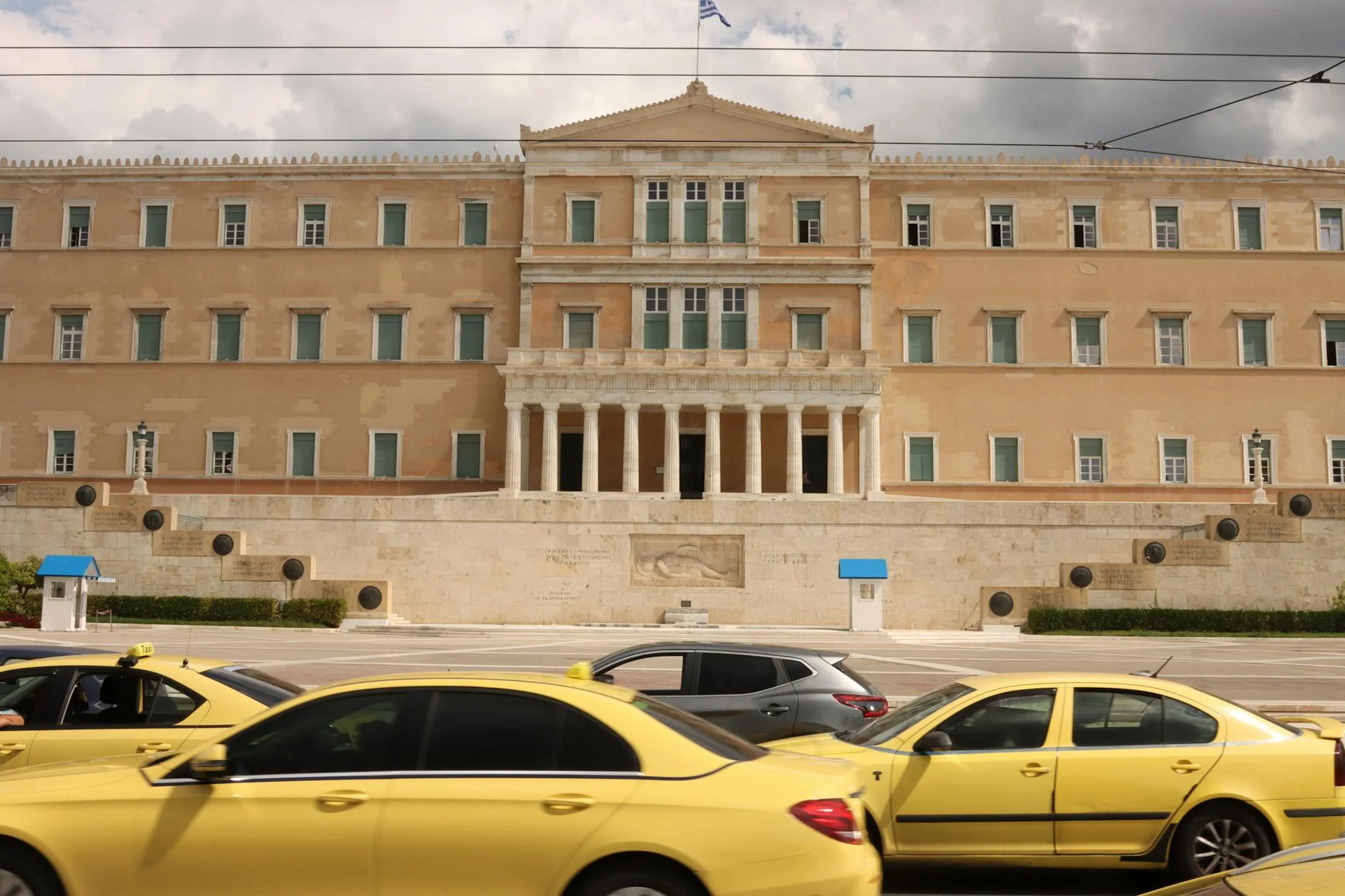
ATHENS, 28 April 2026 — The Greek government is moving toward requiring social media platforms to verify and publicly link user identities to all posts, framing the measure as a cure for online harassment and disinformation. Digital Governance Minister Dimitris Papastergiou told Euractiv that anonymity itself is the problem. But the proposal sits at a dangerous intersection: it echoes genuine concerns about platform toxicity while borrowing tactics from regimes that have weaponised identity verification against political opponents.
Dispatch
ATHENS, 28 April 2026 — Euractiv reported the Greek government's push for mandatory identity verification on social media platforms:
"The Greek government is pressing ahead with a plan to ban anonymity on social media, aiming to curb rising toxicity, according to Dimitris Papastergiou, the minister of digital governance. 'In ancient Greece, everyone could express their opinion openly and by name – they would raise their hand and share their view. This should inspire us as we shape a new digital democracy,' the minister told Euractiv on the sidelines of the Delphi Economic Forum."
Euractiv, 28 April 2026
Papastergiou's framing invokes Athenian democracy—but ancient Athens excluded slaves, women, and non-citizens from the agora. His appeal to classical precedent obscures a modern problem: the Greek government claims that anonymous accounts are driving "coordinated harassment, fake news, threats and the spread of hate speech." Deputy Prime Minister Pavlos Marinakis clarified that the goal is not to eliminate pseudonyms but to ensure "every profile corresponds to a real person," creating a registry of identities behind every account [1].
A contrasting perspective emerges from digital rights advocacy. Article 19, a London-based freedom of expression organisation, has warned for years that anonymity bans—even when framed as anti-harassment measures—create infrastructure that authoritarian actors exploit. The Euractiv article itself flags this tension: "EU governments which consider such a measure will also need to address potential freedom of speech concerns – as digital rights campaigners have warned for years" [1]. The article notes that critics "highlight the technical complexity of the issue and suggest that an EU-wide approach may be more practical to implement," but does not elaborate on which critics or what their specific objections are [1].
Meanwhile, the broader context of online speech moderation reveals how quickly identity-based enforcement can escalate. In the United States, social media has become a flashpoint for political accountability—but in ways that underscore the stakes of removing anonymity. A UnitedHealthcare social media manager was fired after posting sarcastic comments on TikTok about an assassination attempt on President Trump [9]. A Wisconsin teacher was placed on administrative leave after posting a sarcastic reference to historical assassins on X [3]. These cases show how named, identified individuals face professional consequences for provocative speech—consequences that might be amplified if every user's identity were permanently linked to their posts in a government-monitored registry [3][9].
What's Really Happening

The Real Stakes
Who wins: Papastergiou and Mitsotakis gain a headline-friendly policy ahead of 2027 elections. Greek voters concerned about online harassment and disinformation may perceive the government as "doing something." Platforms face pressure to comply or withdraw from the Greek market—a small but non-trivial revenue stream [1].
Who loses: Journalists investigating corruption, activists organising protests, and minorities facing harassment can no longer use anonymity as a shield. A Greek journalist reporting on organised crime, or a LGBTQ+ activist in a conservative region, loses the option to post without fear of retaliation [1]. Once an identity registry exists, it becomes a tool for future governments—including authoritarian ones. Historical precedent is stark: Hungary's Viktor Orbán has weaponised data retention laws to identify and intimidate critics [1].
What changes: If Greece implements the ban and other EU member states follow, the internet becomes a fundamentally different space. The architecture of pseudonymity—which has enabled everything from whistleblowing to scientific debate to political dissent—collapses. Platforms would face a choice: comply with a fragmented patchwork of national identity laws, or withdraw from smaller markets. The most likely outcome is a two-tier internet: verified identity in Europe, anonymity elsewhere.
Confirmed: Papastergiou stated that the major problem behind anonymity is toxicity and that people should only express opinions if others know who they are [1]. This is a values statement, not a causal claim. It assumes that named speech is inherently less toxic—an assumption contradicted by the vitriol visible on verified platforms like Facebook, where users post under their real names [1].
Projected: If Greece passes the law, the European Commission may challenge it under GDPR and the Charter of Fundamental Rights, which protect privacy and freedom of expression. Alternatively, if the EU does not intervene, other member states (Hungary, Poland, France) may adopt similar measures, fragmenting the digital single market [1].
Geopolitical Dimension
Greece's move signals a fracture within the EU on digital governance. Brussels has attempted to create a unified framework through the DSA, which emphasises platform accountability and content moderation without mandating identity verification [1]. A Greek unilateral ban on anonymity contradicts this approach and creates legal uncertainty for platforms operating across the bloc.
The timing is also notable: Mitsotakis is positioning Greece as a law-and-order government ahead of 2027 elections, while also signalling alignment with other centre-right European governments (UK, France) that are tightening social media restrictions [1][2]. However, this coalition is ideologically fragile. The UK is focusing on age restrictions and algorithmic transparency; France has pursued platform liability for user content. Greece's identity-verification approach is the most invasive and may not gain traction beyond Athens.
China and Russia will likely monitor Greece's implementation. Both countries have used real-name registration systems to suppress dissent—China's WeChat ecosystem, Russia's VKontakte platform. If Greece succeeds without significant pushback from Brussels or the US, it provides a democratic veneer for similar policies elsewhere [1].
Impact Radar
Watch For
1. European Commission response: If Brussels does not issue a formal legal opinion on Greece's proposal by Q3 2026, it signals either tacit approval or bureaucratic paralysis. A challenge under GDPR or the Charter of Fundamental Rights would indicate serious EU-level resistance [1].
2. Platform compliance timeline: Meta, TikTok, X, and YouTube will be forced to choose between implementing identity verification in Greece or withdrawing from the market. Watch for public statements from platform CEOs in May–June 2026. If any major platform complies, others will follow; if all resist, Greece may attempt to block access [1].
3. Election cycle signal: If Mitsotakis's government uses the anonymity ban as a campaign platform in Q4 2026, it signals that the policy is popular domestically and may become law regardless of EU pressure. Conversely, if the government drops it quietly, it suggests EU or platform pressure was decisive [1].
Bottom Line
Greece's anonymity ban is a policy dressed in democratic language that would create the infrastructure for authoritarianism. Papastergiou is right that online toxicity is real—but anonymity is not its cause; it is a symptom of platforms' failure to moderate at scale. Banning anonymity does not solve harassment; it weaponises identity. If Greece succeeds, expect other EU member states to follow, fragmenting the digital single market and creating a template for regimes far less committed to democratic norms.
---