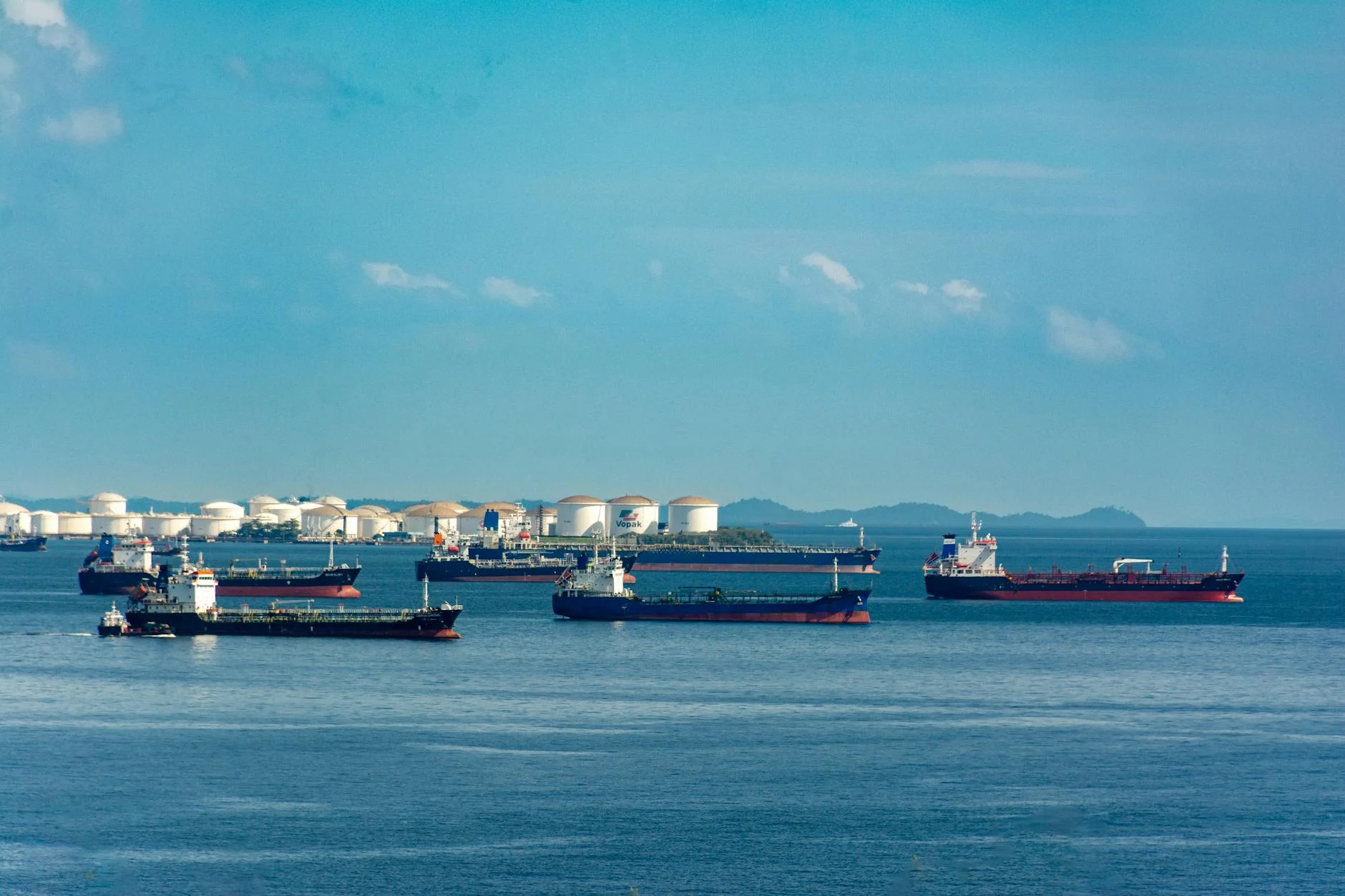
On Monday, 28 April 2026, Iran's Foreign Minister Abbas Araghchi delivered a peace proposal to the Trump administration via Pakistani intermediaries: reopen the Strait of Hormuz, lift the US naval blockade on Iranian ports, end the war—and defer nuclear talks indefinitely. Trump's national security team convened to review it. By Tuesday, oil markets were pricing in uncertainty. By Wednesday, the real negotiating dynamic became visible: Trump is not holding all the cards. He is holding most of them and losing leverage by the hour.
---
Dispatch
WASHINGTON / ST. PETERSBURG, 28–29 APRIL 2026 — The White House confirmed receipt of Iran's proposal through official channels, though with studied ambiguity about whether Trump would entertain it.
US President Donald Trump's national security team is reviewing an Iranian peace plan to halt the war and open the Strait of Hormuz, while postponing talks on its nuclear programme. Iran's Foreign Minister Abbas Araghchi meets Russian President Vladimir Putin in St Petersburg and says Tehran is considering a US request to restart negotiations.
Al Jazeera, 28 April 2026
White House press secretary Karoline Leavitt told reporters: I will confirm the president has met with his national security team this morning. The meeting may be ongoing, but the proposal was being discussed.[1] She was careful not to say Trump was "considering" the offer—a signal that the administration wanted room to reject it without appearing weak.
But Secretary of State Marco Rubio's response on Fox News revealed the real US concern: Iran's proposed "toll" system for Hormuz transit. Rubio said:
What they mean by opening the straits is, 'Yes, the straits are open, as long as you coordinate with Iran, get our permission, or we'll blow you up and you pay us.' That's not opening the straits. Those are international waterways.[8]
The contrast sharpens when set against Iran's diplomatic activity. Araghchi's 48-hour circuit—Pakistan, Oman, back to Pakistan, then St. Petersburg—was designed to do precisely what Trump claims Iran cannot do: build international coalition cover. In Oman, a country with direct shoreline on Hormuz, the Omani foreign minister said:
As coastal states, 'we recognize our shared responsibility to the international community and the urgent humanitarian need to free the seafarers held for far too long.' Much diplomacy is required and practical solutions to ensure lasting freedom of navigation.[3]
That is diplomatic language for: we will help broker a deal that saves Iran's face without humiliating it.
A different reading comes from Germany's Chancellor Friedrich Merz, whose assessment directly contradicted Trump's public posture:
The Iranians are obviously very skilled at negotiating, or rather, very skilful at not negotiating, letting the Americans travel to Islamabad and then leave again without any result. An entire nation is being humiliated by the Iranian leadership.[6]
Merz's statement is significant not because it is correct—it is partly correct—but because it signals that US allies are losing confidence in Trump's negotiating strategy. Trump cancelled the Islamabad talks on Saturday with a Truth Social post: Too much time wasted on travelling, too much work![10] He then claimed we have all the cards; they have none![10] Within 48 hours, Iran had leveraged that cancellation into a new proposal, secured Putin's backing, and positioned Oman as a mediator. The perception of American impatience is now working against Washington.
---
What's Really Happening
---
The Real Stakes
The immediate stakes are commodity prices and global supply chain stability. About one-fifth of the world's crude oil and liquefied natural gas transits Hormuz annually—roughly 20 million barrels per day of crude, fuels, and petrochemicals.[9] The waterway has been effectively closed for two months. Even if hostilities ended tomorrow, Andy Lipow (president of Lipow Oil Associates) estimates it would take 4–6 months for oil markets to stabilize, as mines must be cleared, tanker congestion eased, and production gradually restarted.[9] In the interim, oil prices will remain elevated as inventories approach critical levels.
But the deeper stakes are geopolitical and structural. If Iran succeeds in extracting a "toll" system for Hormuz transit—reframed as a "reconstruction fee" or "maritime services charge"—it will have normalized the weaponisation of a global commons. Future disputes between the US and Iran, or between any great power and a smaller adversary, will default to maritime coercion. Tanker seizures, insurance spikes, and sabotage claims will become routine tools of statecraft. The UN International Maritime Organization has already rejected any fee system: Arsenio Dominguez, the IMO's secretary general, stated There's no legal basis for the introduction of any tax, any customs, or any fees on straits for international navigation.[6] But legality and enforcement are different things when a nuclear-armed state controls the chokepoint.
The US faces a genuine dilemma. Accepting Iran's Hormuz-first proposal means deferring the nuclear issue—Trump's stated war aim—indefinitely. Rejecting it means sustaining a blockade that will push oil to $110–150/barrel, destabilise developing economies (the UN chief warned of a global food emergency if Hormuz remains closed), and invite allied criticism that the US prioritises nuclear theology over humanitarian and economic reality.[1][9] Trump's claim that he has "all the cards" is rhetorical cover for a situation in which neither side can achieve total victory without accepting unacceptable costs.
Confirmed: The Trump administration has not yet signalled acceptance of Iran's proposal. Leavitt's statement that Trump's red lines have been made very, very clear suggests the White House is still demanding nuclear concessions as a precondition.[7] But the fact that the proposal is being discussed—not dismissed—indicates the US recognises the current trajectory (rising oil prices, allied pressure, no talks) is unsustainable.
---
Geopolitical Dimension
This conflict now involves five distinct power centres with incompatible interests:
The United States wants a permanent end to Iran's nuclear programme and cannot accept a settlement that defers this indefinitely. Trump's political brand depends on "winning" against Iran; accepting a Hormuz-only ceasefire while nuclear talks stall would be portrayed as capitulation by his opponents. [1][8]
Iran wants reconstruction funding, sanctions relief, and security guarantees. It cannot survive politically if it appears to have surrendered on nuclear sovereignty. By proposing Hormuz-first, it is betting the US will either accept the sequencing or face domestic pressure (rising oil prices, recession signals) that forces capitulation later. [3][6]
Russia has no interest in a quick US-Iran settlement. A prolonged conflict keeps the US distracted from European theatre, raises energy prices (benefiting Russian exports), and gives Moscow leverage as a potential mediator. Putin's public backing of Iran is a signal that Moscow will not allow the US to isolate Tehran militarily. [3]
Gulf allies (Saudi Arabia, UAE, Oman) are caught between energy dependency and security alignment with the US. Oman's visible mediation role suggests the Gulf states are hedging—they want Hormuz open (for their own exports) but do not want to be seen as abandoning Iran entirely. [3]
Europe is experiencing the conflict as an economic crisis. Rising oil and energy prices are feeding inflation, straining industrial production, and creating political pressure on governments to broker a ceasefire regardless of nuclear outcomes. Germany's Merz statement is partly a signal to Washington: solve this, or Europe will find its own diplomatic path. [6]
The geopolitical structure is now a negotiation between a US that cannot afford to lose and an Iran that cannot afford to appear to lose—with Russia, the Gulf, and Europe all pushing toward a settlement that splits the difference.
---
Impact Radar
---
Watch For
1. Trump's direct statement on Iran's Hormuz proposal. Leavitt said you'll hear directly from the president, I'm sure, on this topic very soon.[1] His response will signal whether the US is willing to entertain a two-step sequence (Hormuz first, nuclear later) or insist on a comprehensive deal. If Trump rejects the proposal without offering a counter-offer, oil markets will reprice upward sharply.
2. Whether Araghchi returns to Washington or another Gulf capital for direct US talks. His current circuit (Pakistan → Oman → Pakistan → Russia) is mediation, not negotiation. If he travels to Washington or a neutral venue for direct talks with US envoys within the next 10 days, it signals serious movement. If he does not, the diplomatic pause will extend and oil prices will remain elevated.
3. The IMO's formal response to Iran's toll proposal. The organisation has already rejected any fee system as illegal under international maritime law. If Iran proceeds with toll collection anyway, it will force the US to choose between enforcing IMO rules (via military escort of tankers) or accepting Iran's de facto authority over Hormuz. This choice will define whether the conflict ends or transforms into a protracted maritime standoff.
---
Bottom Line
Trump is not holding all the cards; he is holding most of them and losing leverage by the hour. Iran has reframed the negotiation from maximalist demands (broad security guarantees, full sanctions relief, nuclear sovereignty) to a narrow, defensible position (reopen Hormuz, defer nuclear talks). The US cannot sustain a blockade indefinitely without economic and allied pressure forcing a settlement on Iran's terms. Trump's best outcome is a two-step sequence that preserves the nuclear issue for later negotiation—but accepting this now means admitting his initial war aim (permanent nuclear restrictions) cannot be achieved without unacceptable economic cost. Watch for his direct statement on the proposal; it will reveal whether he is willing to redefine victory or double down on a strategy that is already losing.
---