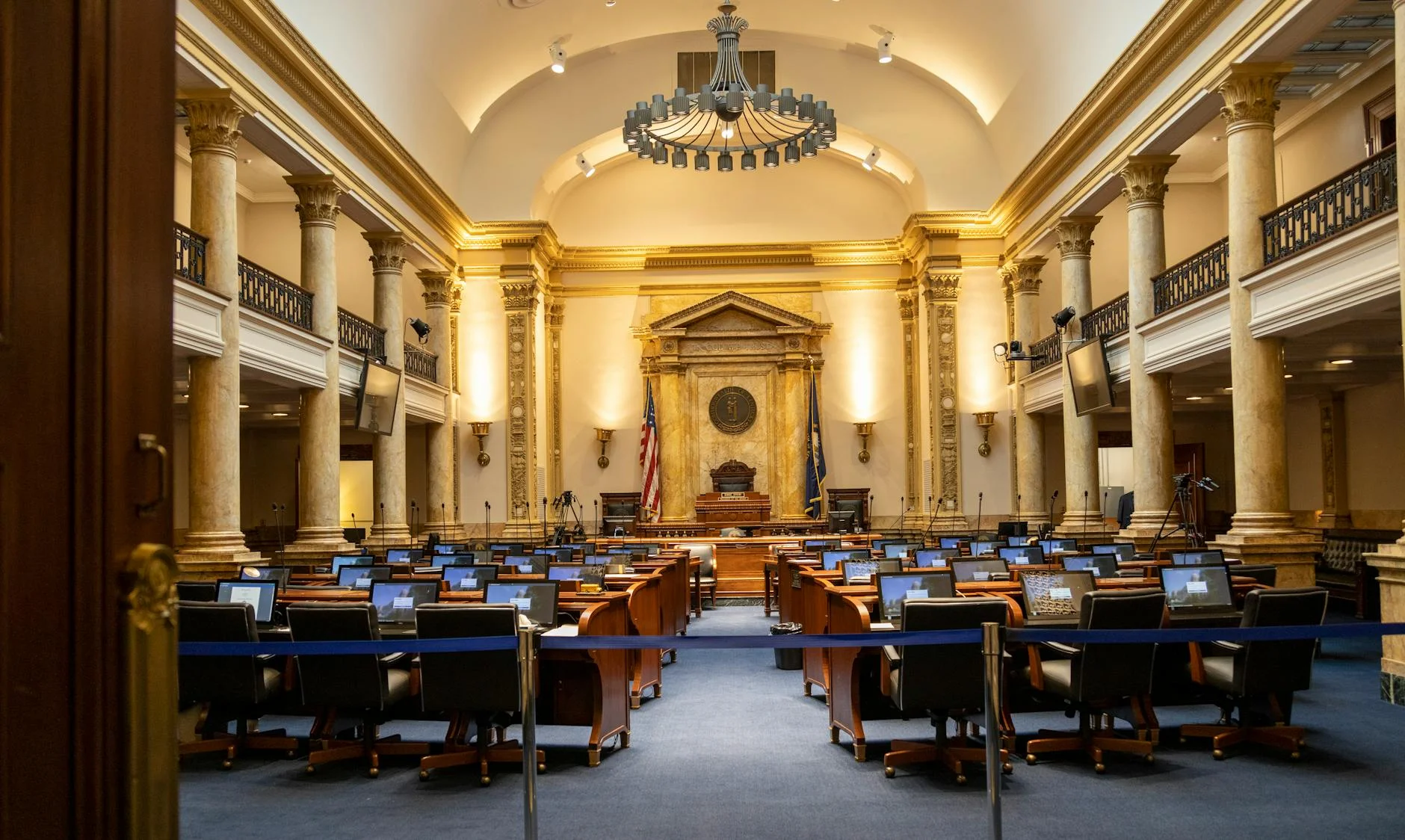
King Charles III addressed a joint session of Congress on Tuesday, April 28, 2026, in a speech billed as a celebration of Anglo-American ties but that functioned, for segments of the Democratic caucus, as a pointed critique of the Trump administration's approach to presidential authority and NATO. The address revealed deep fissures in US-UK relations over Iran policy—and exposed how a foreign head of state can weaponise the Capitol's ceremonial spaces for domestic political messaging.
Dispatch
WASHINGTON, DC, 28 APRIL 2026 — The BBC's North America correspondent Anthony Zurcher documented the speech's subtext in real time, identifying moments where Democratic lawmakers responded with particular intensity to passages about executive checks and balances:
When King Charles noted that executive power subject to checks and balances was a British legal tradition, enshrined in the Magna Carta, which became a bedrock principle in the US Constitution, he received another standing ovation – with a twist. The cheers started on the Democratic side of the chamber, before spreading across the entire room. Donald Trump's critics on the left have frequently denounced the president for what they see as his abuse of power. A sense that the president should be subject to rigorous checks and balances was one of the motivating sentiments behind the no kings rallies that have drawn hundreds of thousands across the nation over the past year.[1]
The moment was neither accidental nor unprecedented: foreign dignitaries have long used Congressional addresses to signal messages aimed at domestic audiences. What was notable here was the degree of asymmetry—Democrats applauded lines about restraint on executive power; Republicans remained silent or joined belatedly.
A contrasting editorial framing emerged from Breitbart, which emphasised the King's reaffirmation of the special relationship and his explicit acknowledgment of disagreement without rupture:
Apparently addressing the current frayed relations between Washington and London over the response to the Iran conflict from British Prime Minister Sir Keir Starmer, the King said: Whatever our differences, whatever disagreements we may have, we stand united in our commitment to uphold democracy, to protect all our people from harm, and to salute the courage daily risk their lives in the service of our countries.[2]
This framing—emphasising unity despite differences—downplayed the implicit criticism of Trump's NATO scepticism and isolationist rhetoric that dominated the speech's middle section. ABC News, meanwhile, highlighted the sheer rarity of bipartisan civility:
It's something that we don't see often in a bitterly divided Congress: A packed chamber, full of laughter, unity, and bipartisan standing ovations, in stark contrast to the last State of the Union address, where there were empty seats, several disruptions and members walking out in protest.[3]
What's Really Happening

The Real Stakes
The speech accomplished its surface objective: it papered over the Iran rift without resolving it. The King affirmed the eternal alliance while acknowledging that we do not always agree.[2] But it did something more consequential: it created a template for how allied leaders can use US Congressional platforms to critique a sitting American president without formal breach.
For the Trump administration, the speech posed a specific problem. Trump has built his second term on a narrative of American retrenchment from multilateral commitments and a reassertion of America First priorities. Charles's emphasis on NATO's durability, Ukraine's need for sustained support, and the dangers of isolationism directly contradicted this messaging. Trump responded by attempting to reframe the King's position: at a state banquet at the White House, Trump said that Charles did not want Iran to have a nuclear weapon, a statement the king did not comment on.[4] This was Trump attempting to conscript Charles into his Iran policy—a move that failed, because Charles did not amplify or confirm it.
For Democrats, the speech functioned as political theatre. It gave them permission to applaud critiques of executive overreach without appearing to stage a partisan ambush of a foreign dignitary. The no kings rallies—a grassroots movement that has drawn hundreds of thousands of Americans concerned about presidential power—suddenly had a royal endorsement, however unintentional. This is soft power in reverse: a foreign monarch inadvertently empowering domestic opposition to a sitting president.
For the UK, the visit achieved its narrow diplomatic goal: it signalled that London's reluctance on Iran does not threaten the fundamental alliance. But it also revealed the limits of that alliance. Britain cannot follow Trump into isolationism or a wholesale retreat from NATO. The King's speech was, in effect, a public statement of that constraint.
The most consequential absence from the speech was any discussion of Epstein. The BBC noted that for those who had called for the King to meet with Epstein survivors while in the US, that comment alone may be viewed - to use an American phrase - as weak tea.[1] This matters because the Epstein files remain a live political issue. Congress mandated their release; new revelations continue to emerge about connections between Epstein and the wealthy and powerful on both sides of the Atlantic. The King's silence suggested that this conversation—critical to both nations' reckoning with institutional complicity—remains too sensitive for royal intervention.
Geopolitical Dimension
The speech mapped three distinct geopolitical fault lines:
US-UK relations over Iran. The King's visit was explicitly designed to repair damage caused by British refusal to fully back the US-Israeli military campaign against Iran. By reaffirming the alliance without capitulating on Iran, Charles signalled that London's position is fixed: Britain will defend the transatlantic relationship, but not at the cost of its own strategic judgment. This matters because it suggests the Iran conflict will not produce a unified Western response—a fracture that Tehran will exploit.
Trump's NATO scepticism vs. European alliance cohesion. Charles, a former Royal Navy officer, made specific mention of his service and used it as a springboard to defend NATO's value. Trump has repeatedly attacked the alliance as a drain on American resources. The King's invocation of Article 5's single use—after 9/11, when NATO allies mobilised for America—was a direct historical rebuttal to Trump's claim that NATO won't be there if we need them.[3] This is not abstract: it signals that if Trump withdraws from NATO, European leaders will face a choice between deepening European defence integration or accepting American abandonment.
US commitment to Ukraine. The King called for the defence of Ukraine, and her most courageous people with the same unyielding resolve shown after 9/11.[4] Trump has been ambivalent about prolonged aid to Ukraine. The King's statement—made in Congress, on record, before the world—created political cover for Democrats to continue advocating for Ukrainian support, even as the Trump administration signals fatigue with the commitment.
Impact Radar
Watch For
1. Whether Trump responds publicly to Charles's NATO remarks. Trump has a pattern of attacking foreign leaders who contradict him. Watch his Truth Social posts and press statements in the week following the speech for any suggestion that he views the King as having undercut his negotiating position on alliance burden-sharing. If Trump remains silent or praises Charles, it suggests he is absorbing the diplomatic hit without escalation.
2. Congressional action on Iran policy in the coming months. The King's speech did not change the underlying Iran disagreement, but it may embolden Democrats to push back against Trump's military escalation. Watch for legislative efforts to constrain Trump's Iran options—a War Powers resolution, funding restrictions, or diplomatic authorization language that requires consultation with allies.
3. UK-US intelligence and defence coordination in the next budget cycle. The King emphasised that US-UK security ties are hardwired together through relationships, measured not in years, but in decades.[3] If the Trump administration begins cutting defence cooperation or intelligence-sharing with Britain over the Iran dispute, it would signal a fundamental rupture of the alliance. Watch for any announcement of reduced joint exercises, restricted intelligence access, or withdrawal from shared defence projects.
Bottom Line
King Charles III delivered a masterclass in coded political messaging: he reaffirmed the US-UK alliance while signalling that Britain will not follow Trump into isolationism or Iran escalation. For Democrats, the speech functioned as a gift—permission to applaud critiques of executive overreach and alliance scepticism without appearing partisan. For Trump, it was a constraint: a public, royal-level assertion that the transatlantic order has limits that even American presidential power cannot unilaterally override. The real test will come in the months ahead, when Trump must decide whether to accept these constraints or attempt to shatter them.