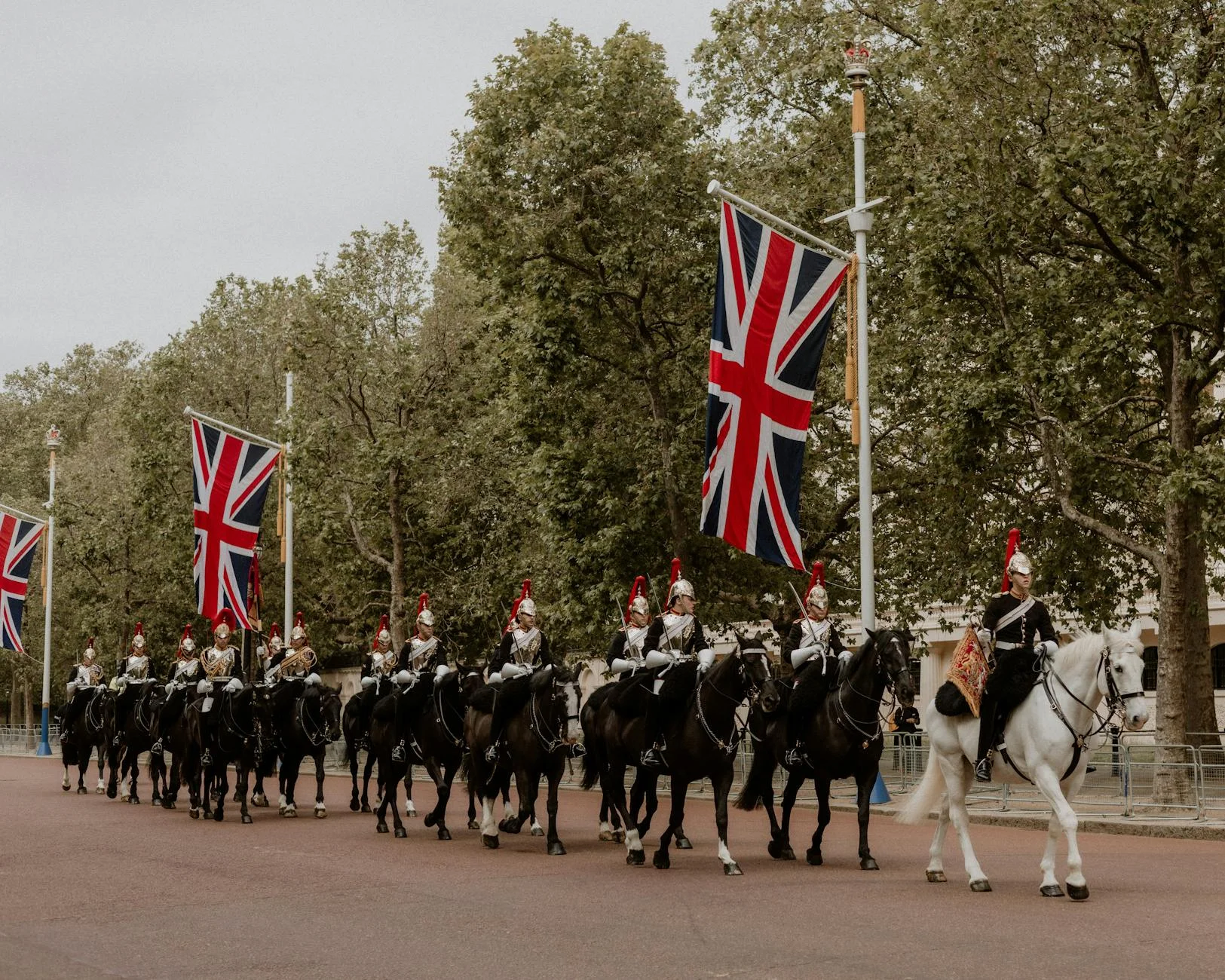
Donald Trump assured King Charles III on Sunday that he would be very safe during his four-day state visit to the US, which began Monday at Joint Base Andrews. The reassurance came hours after the White House and Buckingham Palace held emergency security talks following a gunman's breach of a Trump event in Washington DC on Saturday—an incident that forced the president to the floor and injured a Secret Service agent. Both governments decided the visit would proceed largely as planned. This is a political calculation dressed as a security conclusion.
Dispatch
WASHINGTON DC, 12 MARCH 2026 — The BBC's royal correspondent Sean Coughlan reported from Washington DC on Trump's public confidence in the visit's safety:
Donald Trump has said King Charles III will "be very safe" during his state visit to the US, which is due to begin later on Monday. Further security talks took place between the White House and Buckingham Palace after a gunman gained access to an event attended by Trump in Washington DC on Saturday. Asked about the security implications for the royal visit, the US president told CBS' 60 Minutes on Sunday that the grounds of the White House, where King Charles will visit, are "really safe". The King and Queen's programme will go ahead largely as planned, Buckingham Palace said, with the UK government hoping it could ease diplomatic tensions.
BBC World, 12 March 2026
Trump elaborated on his safety assessment in the same interview:
"I think it's great, he'll be very safe... the White House grounds are really safe. This area of not very many acres is really safe. And he'll be staying here, I believe he's going to a couple of other locations because he's here for a few days. He's a great guy. They called him and they are so looking forward to being here. We spoke this morning."
Donald Trump, CBS 60 Minutes, 11 March 2026
A contrasting assessment of the security context comes from reporting on the Saturday incident itself. The BBC's account of the event, via performer Oz Pearlman, reveals how rapidly the threat materialized:
A shocked performer has described locking eyes with President Donald Trump as they ducked for cover after shots were fired during the White House Correspondents' dinner on Saturday night. Oz Pearlman - a self-described "mentalist" performing mind tricks - told the BBC he was talking to Trump, First Lady Melania Trump and White House press secretary Karoline Leavitt when the attack happened. "I went down very quickly. And then the Secret Service brought President Trump down: I would say very effectively - but quite violently," he said. "We were about half-a-metre apart… face-to-face looking at each other on the ground, when I'm hearing shots and thinking to myself, 'We're about to die.'"
BBC World (eyewitness account), 12 March 2026
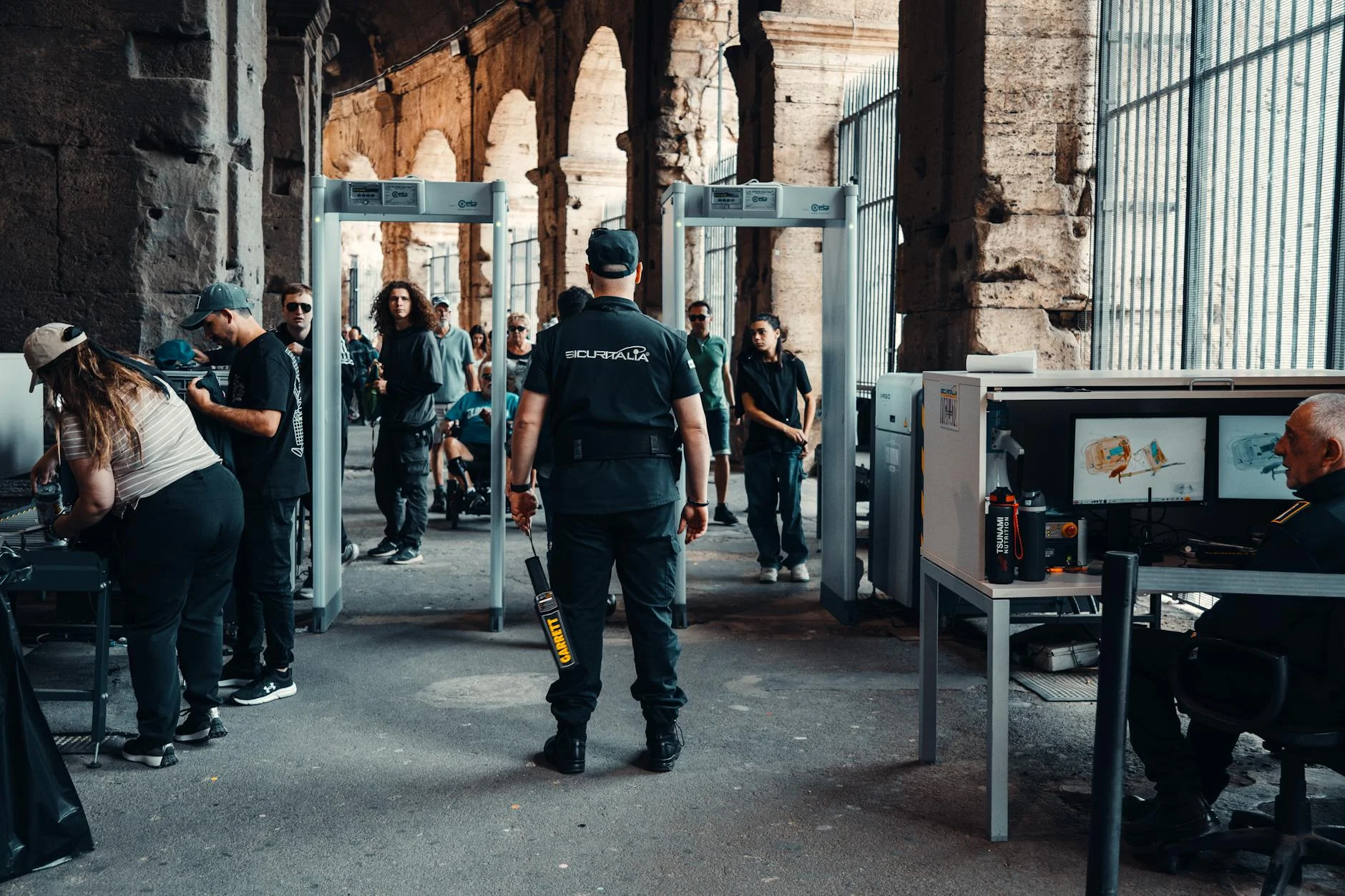
The suspected gunman, identified as Cole Tomas Allen, 31, from California, exchanged fire with security agents on a floor above the main event. According to CBS reporting cited by the BBC, Allen told officials after his arrest that he wanted to shoot officials in the Trump administration[1]. This detail—that the attacker's stated motive was to target government officials—adds a dimension that extends beyond Trump himself. A monarch and foreign dignitary now enters an environment where at least one armed individual has already demonstrated the ability to breach security perimeters and engage in armed conflict with protective services.
The UK's ambassador to the US, Sir Christian Turner, framed the decision to proceed in diplomatic rather than security terms:
The UK's ambassador to the US, Sir Christian Turner, said the visit would be about "renewing and revitalising a unique friendship" between the two countries. He said Prime Minister Sir Keir Starmer had spoken to Trump on Sunday, and the trip would proceed largely as expected.
BBC World, 12 March 2026
What's Really Happening
The Real Stakes
For Trump: The visit is a win on multiple fronts. He is seen on the world stage alongside royalty, projecting statesmanship at a moment when his political position at home is contested [1]. The King's presence confers legitimacy. It also provides a distraction from Trump's own legal and political battles. Breitbart notes that the visit might be a welcome diversion from his own political battles [2]. The state dinner and the King's address to Congress are high-profile events that will dominate the news cycle for four days. Trump also told the BBC that he believed the visit could help repair relations with the UK—a statement that acknowledges the current strain but positions him as the architect of reconciliation [1].
For King Charles: The visit is a calculated risk that serves institutional interests. A cancelled visit would have been read as a capitulation to security concerns and a sign of weakness. Proceeding demonstrates that the monarchy is not intimidated and that the Anglo-American relationship is durable [1]. The King will address Congress—a platform his mother, Queen Elizabeth II, used in 1991 [2]. But the visit also exposes the King to a security environment that has just proven itself compromised. If an incident occurs during the visit, the reputational damage to both the monarchy and to Trump would be severe. The King is, in effect, trusting Trump's security apparatus and Trump's judgment about acceptable risk.
For the bilateral relationship: The visit is a reset. Trump has criticised Starmer and the UK government over Iran policy. The BBC notes that this visit comes at an unusually difficult time for the US and UK partnership and that Trump has criticised Starmer over not supporting the US in its conflict with Iran [1]. The King's presence is meant to transcend these disagreements by invoking shared values and shared history. Sir Christian Turner stated that the partnership demonstrates that both peoples are safer, richer and happier [1]. This is aspirational language designed to paper over real policy divergences. Whether the visit actually repairs the relationship or merely postpones the reckoning will depend on Trump's behaviour during the four days—and on whether any security incident occurs.
Geopolitical Dimension
The visit occurs against a backdrop of acute US-UK tension over Iran. Trump is currently engaged in a military conflict with Iran and has demanded that Iran open the Strait of Hormuz and end the war [3]. The UK government has not aligned itself fully with Trump's Iran posture, and Trump has made his displeasure public. Simultaneously, Iran's foreign minister Abbas Araghchi is conducting a diplomatic tour—visiting Pakistan, Oman, and Russia—to build international support for Iran's position [3][4]. Russia's Putin has publicly backed Iran, with Tass reporting that Putin told Araghchi that the Iranian people are fighting courageously and heroically for their sovereignty [4].
The King's visit to the US is partly designed to shore up the Anglo-American alliance at a moment when it is being tested by these geopolitical fractures. The UK cannot afford to be seen as distant from the US while Iran is actively seeking to divide Western unity. However, the visit also carries risk: if Trump uses the occasion to pressure King Charles or the UK government to take a harder line on Iran, or if Trump makes public statements that embarrass the King or the UK government, the diplomatic purpose of the visit could backfire.
Labour MP Emily Thornberry, who chairs the Foreign Affairs Committee, told the BBC she remained anxious about the diplomatic implications, describing it as a really high-wire act and noting that Trump is so unpredictable, you just don't know what he's going to say [1]. This anxiety is not about security in the narrow sense; it is about whether Trump will use the visit as a platform to make demands or statements that complicate UK policy.
Impact Radar
Watch For
1. Trump's remarks at the state dinner (Tuesday, 13 March 2026). Trump will make his own remarks at the state dinner, and the King will respond. Watch for any statements that deviate from the diplomatic script—particularly any public pressure on the UK regarding Iran policy, tariffs, or other bilateral disputes [1]. If Trump uses the occasion to make demands or criticism, the diplomatic purpose of the visit will be undermined.
2. The King's address to Congress (Tuesday, 13 March 2026). The King will address a joint session of Congress, following in the footsteps of Queen Elizabeth II in 1991 [2]. Watch for any statements that implicitly or explicitly distance the UK from Trump's foreign policy, particularly on Iran. The King will be attempting to balance support for the US alliance with the UK's own policy positions.
3. Any additional security incidents in Washington DC during the visit (13-16 March 2026). The visit runs through Wednesday, 16 March. Given that a breach occurred just 48 hours before the King's arrival, watch for any reports of security incidents, suspicious activity, or threats during the visit. If another breach or incident occurs, it will demonstrate that the Saturday attack was not an isolated incident but rather a sign of systemic vulnerability.
4. Public statements from Emily Thornberry or other UK opposition figures after the visit. Thornberry has already expressed anxiety about the diplomatic implications [1]. Watch for any post-visit statements from UK politicians criticizing Trump's behaviour or expressing concern about the state of the bilateral relationship. Such statements would indicate that the visit failed to repair UK-US relations or that Trump used the occasion to make demands that the UK government views as problematic.
Bottom Line
King Charles's visit is proceeding because the political cost of cancellation exceeds any plausible security threshold, not because security concerns have been resolved. The Saturday gunman's breach of a high-security event, his stated motive to target government officials, and his engagement with Secret Service agents all occurred within 48 hours of the King's arrival—a timeline that suggests the threat environment in Washington DC is actively unstable. Both governments have decided that the diplomatic and symbolic value of the visit justifies the risk. That is a legitimate calculation. But it is a calculation, not a security assessment. If nothing goes wrong, the visit will be remembered as a successful reset of the US-UK relationship. If something does go wrong, it will be remembered as a catastrophic failure of judgment.
---